Is 20/50 Vision Bad? What It Means for Your Eyesight
Feb 18, 2026
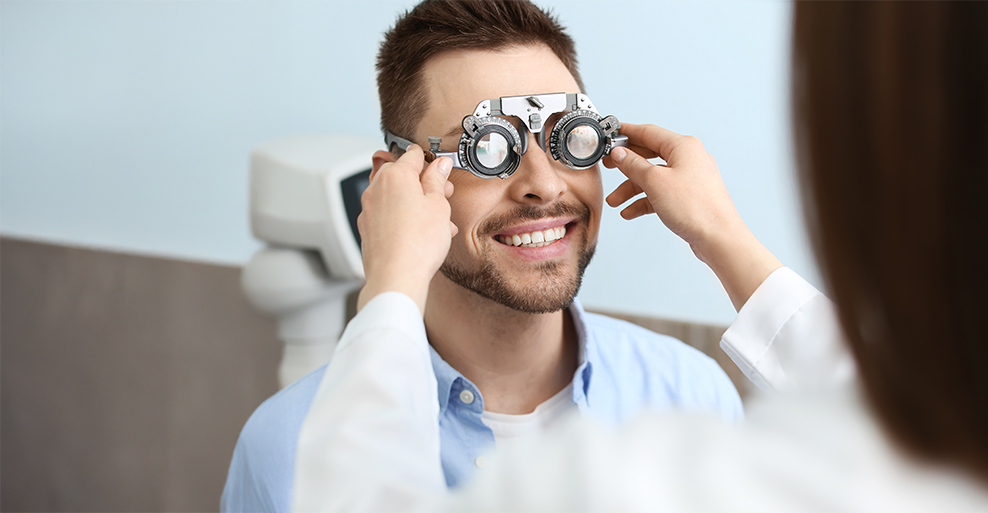
20/50 vision isn’t considered terrible, but it does mean mild visual impairment that often needs correction for clear distance vision. Someone with 20/50 eyesight sees at 20 feet what a person with normal 20/20 vision sees at 50 feet. Many folks with 20/50 vision get by just fine day-to-day, but things like driving, reading signs, or recognizing faces from a distance can get tricky without glasses or contacts. Eye specialists call 20/50 vision below average, but it’s not close to legally blind. Usually, refractive errors like myopia or astigmatism cause it, and prescription lenses or vision therapy can help. Grasping these numbers helps explain how vision tests work and how treatment can bring things back into focus.
What 20/50 Vision Means?
20/50 vision refers to a measurable drop in clarity compared to the standard 20/20. This number tells you how far you can see details clearly and whether you’ll need corrective lenses or a closer look from an eye doctor. With 20/50 vision, a person can see an object clearly at 20 feet that someone with normal 20/20 vision can see at 50 feet. This ratio measures visual acuity, not overall eye health.
The Snellen fraction records this measurement. The first number (20) is the test distance, and the second (50) is the distance a person with normal vision can read the same line. Because visual resolution drops by a factor of 2.5, small text or distant signs can look blurry. Some U.S. states allow driving with this level of acuity if it’s corrected, but don’t expect an unrestricted license without glasses or contacts. Most people with 20/50 vision see a big difference once they put on prescription glasses or contacts. These adjust the focal length, sharpening the image on the retina to hit that 20/20 mark.
How Vision Is Measured?
Eye care pros use a Snellen chart—those big black letters that get smaller line by line. Testing happens at 20 feet (6 meters) with specific lighting to keep things fair. One eye gets covered while the other reads the smallest possible line. If 20/50 is the result, that means the smallest line the person can read matches the 50-foot standard.
The test focuses on high-contrast visual acuity only. Lighting and pupil size can nudge results a bit. Refractive errors like myopia (-1.00 to -1.50 diopters) often show up as 20/50, but proper correction can bring things back to 20/20. These days, automated systems and digital charts provide more consistent measurements, usually accurate within ±0.25 diopters.
What’s the Difference Between 20/50 and Normal Vision?
Normal vision, or 20/20, means seeing details that subtend one arcminute at 20 feet. At 20/50, the details subtend 2.5 arcminutes, so things are less crisp. This change limits the ability to spot fine textures or tiny letters. For example, at 20/50, someone might read letters 8.8 mm tall at 20 feet, while 20/20 vision picks up 3.5 mm tall letters.
Vision Level | Smallest Letter Height (at 20 ft) | Relative Sharpness | Typical Correction Need |
|---|---|---|---|
20/20 | 3.5 mm | 100% | None |
20/40 | 7.0 mm | 50% | Mild |
20/50 | 8.8 mm | 40% | Moderate |
20/100 | 17.5 mm | 20% | High |
Since 20/50 vision makes reading and driving harder, most people pick corrective lenses for daily life. Still, this isn’t severe visual impairment, and with good lighting, most tasks stay doable.
Is 20/50 Vision Considered Bad?
20/50 vision means seeing at 20 feet what others can see at 50. Distance clarity drops, but glasses or contacts usually fix it. The impact varies depending on medical standards, daily needs, and local laws.
Medical Definition of Visual Impairment
Eye doctors use the Snellen chart to measure visual acuity. A 20/50 score means the eye sees only 40% of the detail that 20/20 vision can catch. The American Optometric Association (AOA) calls 20/30 to 20/60 mild vision loss. So, 20/50 isn’t blindness, but it’s definitely a notch down from sharp sight. Myopia (−1.50 diopters) or early presbyopia often cause this, depending on age and eye shape. The eye’s ability to focus light onto the retina sets acuity. When the cornea or lens shape is off, distant things blur. The right corrective lenses shift the focal point back onto the retina, clearing things up to 20/20 or close.
Impact on Daily Activities
Tasks needing fine distance detail get harder with 20/50 vision. Reading road signs at 30–50 meters or recognizing faces at 10 meters can be tough. Even reading small text in a classroom from the back row isn’t easy. Bright light, especially with low contrast, makes distinguishing edges or colors a pain. Driving at dusk or in rain gets riskier. For gamers or anyone at a screen, objects past 1–2 meters may look fuzzy or doubled without correction. Most people bounce back with corrective lenses. A typical −1.50 diopter lens bends light just right, bringing images into focus on the retina. Once corrected, daily activities feel normal, but uncorrected vision still limits some tasks.
Legal Standards for Vision
Countries set minimum vision for driving and certain jobs. In the United States, most states want at least 20/40 vision in one eye for an unrestricted driver’s license. Uncorrected 20/50 vision means you’ll need glasses to drive legally. Jobs needing sharp eyesight, like pilots or law enforcement, require stricter standards—often 20/20 to 20/30 corrected. The World Health Organization (WHO) calls 20/60 to 20/200 “moderate visual impairment.” 20/50 sits just outside that, but it’s still not ideal. Since correction can usually bring 20/50 up to 20/20, it doesn’t count as legal blindness (which starts at 20/200). If correction doesn’t help, though, something more serious like retinal or corneal disease could be going on.
Causes of 20/50 Vision
20/50 vision usually happens because of how light focuses on the retina or from damage to the eye’s structures. Refractive errors, eye diseases, or injury can all play a part.
Refractive Errors
Most cases of 20/50 vision come from refractive errors. These happen when the shape of the eye stops light from focusing right on the retina. The main types are myopia (nearsightedness), hyperopia (farsightedness), and astigmatism. In myopia, the eyeball is often 1–2 mm longer than average (about 24 mm), making distant objects blurry. Hyperopia usually means a shorter axial length, around 22 mm, blurring up-close things. Astigmatism comes from an uneven corneal curve, usually around 43–48 diopters, causing distortion or double vision. These structural quirks change how light bends, so someone with 20/50 vision sees at 20 feet what others see at 50. Glasses or contacts adjust the light’s path, bringing things back into focus.
Eye Diseases
Some diseases can drop visual acuity to 20/50 by damaging the retina, lens, or cornea. Cataracts cloud up the lens proteins and scatter light, increasing intraocular scatter by up to 300% and lowering contrast. Macular degeneration lowers the macula’s photoreceptor density, which usually sits at about 200,000 cones/mm². If density falls below 100,000 cones/mm², central vision gets blurry. Glaucoma raises intraocular pressure above 21 mmHg, compressing the optic nerve and first cutting off peripheral vision, then overall sharpness. These diseases mess up how light is processed or transmitted. Even with correction, vision may not return to normal until the disease gets treated or at least managed.
Injury or Trauma
Physical trauma can also leave someone with 20/50 vision. Blunt force might deform the cornea by 0.1–0.3 mm, changing its curve and power. Penetrating injuries can scar the cornea or damage the lens capsule, reducing transparency by 10–40%. Optic nerve trauma blocks signals between the retina and brain. If more than 30% of nerve fibers get damaged, acuity often drops below 20/50. Retinal detachment, where the retina pulls away from the pigment epithelium, blocks photoreceptor function in the affected area. These injuries change or destroy tissue, so vision loss can become permanent if not fixed quickly. Protective eyewear and fast medical care make a big difference.
Diagnosis and Testing
Eye doctors diagnose 20/50 vision by measuring how clearly someone can see at 20 feet. Structured tests and controlled lighting keep results accurate and help guide treatment.
Eye Exam Procedures
An optometrist or ophthalmologist uses a Snellen chart to check visual acuity. The chart sits exactly 20 feet (6.1 meters) from the patient. Each line on the Snellen chart matches a specific acuity level—20/20, 20/40, or 20/50. The patient reads letters that shrink with each line. Testing happens under luminance levels between 80 and 320 cd/m² for consistent visibility. The patient covers one eye at a time, so each eye is checked separately. If someone can't read the 20/20 line but can manage the 20/50 line, the result is 20/50.
Refractive errors like myopia (nearsightedness) or astigmatism often cause this. The doctor then does a refraction test with a phoropter and trial lenses. This step checks if glasses or contacts can fix the problem. If vision doesn't improve with lenses, the next step is retinal imaging or a slit-lamp exam. These tests look for cataracts or macular degeneration.
Interpreting Vision Test Results
20/50 vision means seeing at 20 feet what someone with normal sight sees at 50 feet. That's about a 40% loss in distance clarity compared to 20/20. The Snellen fraction—first number is the test distance, second is the distance a person with normal vision can read the same line. A bigger second number means worse acuity. Most U.S. states want 20/40 vision or better for an unrestricted driver’s license. Someone with 20/50 vision usually needs corrective lenses to drive legally. Doctors also use logMAR values for comparison. 20/50 equals +0.40 logMAR, which helps standardize results across charts and lighting.
Treatment Options for 20/50 Vision
Most people with 20/50 vision get clear sight again with glasses, contacts, or surgery. The main fixes are prescription lenses, laser correction, and sometimes therapy for eye conditions.
Corrective Lenses
Eyeglasses and contacts help by changing how light focuses on the retina. A typical prescription for 20/50 is around -1.50 diopters, enough to correct mild myopia. Most eyeglass lenses use CR-39 plastic or polycarbonate, both under 2 grams per lens and blocking UV400. Polycarbonate resists impact up to 160 times better than glass, so it's great for sports or jobs with hazards. Contact lenses, usually made from silicone hydrogel, let plenty of oxygen through (Dk/t above 100) and can be worn longer. Single-vision lenses work for daily use, while progressive lenses cover both near and far. Contacts give a wider view but need careful cleaning to avoid infections. It's a trade-off—convenience versus maintenance.
Medical and Surgical Treatments
If glasses or contacts don't do enough, medical or surgical options might help. LASIK uses a 193 nm excimer laser to reshape the cornea, removing 10–15 micrometers per diopter and improving focus. PRK works similarly, but removes the surface layer instead of making a flap. PRK recovery takes 5–7 days, while LASIK is usually 1–2 days. Both surgeries need a cornea thicker than 500 micrometers for safety. For lens problems, phakic intraocular lenses (IOLs) made from collamer can be implanted, with powers from -3.00 to -20.00 diopters. These IOLs last over 10 years in normal eyes. Surgery gives a lasting fix, but risks like dry eye or corneal haze show up in about 1–2% of cases.
Living With 20/50 Vision
People with 20/50 vision see at 20 feet what those with 20/20 vision see at 50 feet. This can affect driving, job performance, and classroom learning, depending on correction.
Driving and Legal Requirements
Most U.S. states require 20/40 vision or better in at least one eye for an unrestricted license. Someone with uncorrected 20/50 vision usually needs glasses or contacts to qualify. At 20/50, road signs, lane markings, and distant objects blur beyond 40–50 feet. Reaction time drops by about 0.3–0.5 seconds compared to normal vision. Some states offer restricted licenses—driving only during the day or on local roads under 45 mph. Night driving is tougher because low light cuts contrast sensitivity by up to 30%, making it harder to spot movement or read signs. Regular eye exams every 12–24 months help keep prescriptions current and vision safe for driving.
Work and Education Considerations
Jobs that need fine visual tasks—like reading labels or using screens—can be 10–20% less accurate with uncorrected 20/50 vision. Many workers need larger fonts, zoomed monitors, or extra lighting to keep up. Students may miss details on a whiteboard at 10–15 feet, losing 40–50% of clarity. Sitting closer or using digital displays helps. Precision jobs—like electronics assembly—usually want 20/30 vision or better. Employers might ask for a Snellen chart report or proof of corrective lens use. Keeping up with vision correction prevents fatigue and keeps performance steady.
Preventing Further Vision Loss
People with 20/50 vision can protect their sight with healthy routines and regular eye checkups. Catching changes early and reducing strain slows down age-related decline or problems from other conditions.
Healthy Eye Habits
Everyday habits matter for eye health. Eating at least 2.5 cups of vegetables and 2 cups of fruit daily gives antioxidants like vitamin A and lutein, which support the retina and lens. These nutrients lower oxidative stress and help delay macular degeneration. Good lighting—between 300–500 lux—reduces strain and fatigue during reading or screen time. Keeping a 50–70 cm distance from a computer and following the 20-20-20 rule (look 20 feet away every 20 minutes for 20 seconds) helps relax the eyes. Hydration matters too—drinking 2.7 liters for women and 3.7 liters for men daily keeps the tear film healthy and prevents dryness.
Regular Eye Exams
Routine eye exams spot refractive changes and early signs of disease. Adults with normal vision should schedule an exam every 2 years, but those with 20/50 vision or chronic issues need to go every 12 months. During an exam, tools like the slit-lamp biomicroscope and tonometer check corneal health and eye pressure. Finding a 2 mmHg jump in pressure early can prevent permanent vision loss. Updated prescriptions keep the retina in focus and reduce headaches or blurry vision during reading or driving. Regular checkups really make a difference for long-term eye health.
When to Seek Professional Help?
Anyone with 20/50 vision should get an eye exam if blurred distance vision, frequent squinting, or headaches after reading start to pop up. At 20/50, a person sees at 20 feet what someone with normal vision sees at 50 feet. This difference can make driving, reading street signs, or recognizing faces from a distance a real hassle. Even catching details on a whiteboard or a menu across the room might feel like a stretch. An optometrist or ophthalmologist measures visual acuity using a Snellen chart—that’s the one with rows of letters getting smaller each line. If reading only reaches the fifth line (20/50), the eye doctor usually prescribes corrective lenses to move vision closer to 20/20. With the right glasses or contacts, clarity improves and eye strain often fades. Sometimes, that’s all it takes to make daily life a lot easier.
Common signs to schedule a visit:
Struggling to read text beyond 20–30 feet
Eyestrain or fatigue after about half an hour on screens
Needing extra light for close-up work
Difficulty seeing at night or in dim settings
Examination parameters:
Test Type | Measurement | Purpose |
|---|---|---|
Visual Acuity | 20/20 to 20/200 scale | Checks distance vision clarity |
Refraction Test | ±0.25 diopter precision | Finds lens power for correction |
Intraocular Pressure | 10–21 mmHg normal range | Screens for glaucoma risk |
Sometimes, 20/50 vision hints at early myopia, hyperopia, or astigmatism. Quick testing can help keep things from getting worse. If glasses or contacts don’t improve vision past 20/40, the doctor might suggest retinal imaging or corneal topography to check for structural eye issues.
Frequently Asked Questions
People with 20/50 vision often wonder how corrective lenses can help and what exactly makes this possible. The results depend on the eye’s optical properties and the materials in modern lenses that adjust how light focuses on the retina.
Is it possible to correct 20/50 vision with glasses or contacts?
Core Performance Parameters:
Glasses and contact lenses usually correct 20/50 vision to 20/20 visual acuity. This means clear vision at 20 feet, like someone with normal eyesight. Lenses change the eye’s focal length by 0.25 to 6.00 diopters, depending on the refractive error. That’s the basic science behind the correction.
Physical & Material Characteristics:
Manufacturers typically use CR-39 plastic or polycarbonate for prescription lenses. These materials have a refractive index between 1.50 and 1.67. Polycarbonate lenses weigh about 1.2 grams per cubic centimeter, so they’re lighter and more impact-resistant. Contact lenses, made from silicone hydrogel, allow 30–50% oxygen permeability, which helps reduce dryness and irritation.
Structural & Design Principles:
Corrective lenses change how light rays converge on the retina. A concave lens (negative diopter) spreads light rays outward to fix myopia. A convex lens (positive diopter) brings light rays together sooner, correcting hyperopia. Contact lenses sit right on the cornea, keeping a steady optical center and cutting down distortion compared to glasses, which rest about 12 millimeters away.
Application Scenarios & Trade-offs:
Glasses work well for people who like easy removal and minimal upkeep. Contacts feel more practical for sports or active days since they don’t fog up or slide around. Contact lens wearers need to follow strict hygiene to avoid corneal infections. The best choice really depends on lifestyle, comfort, and how close the correction gets to 20/20 or 20/25 vision in typical lighting.