How to Measure PD?
Apr 28, 2026
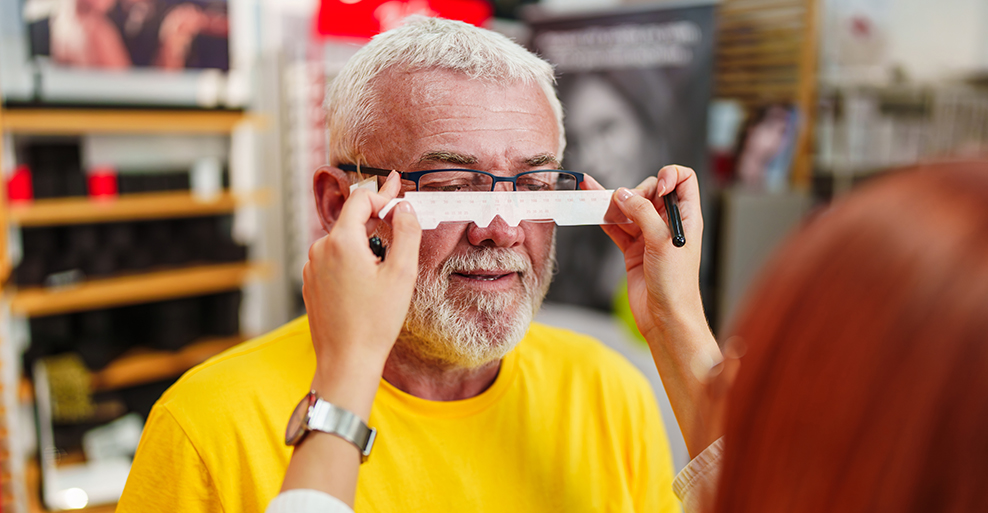
Pupillary Distance (PD) is the distance, in millimeters, between the centers of your pupils. It tells lens makers where to place the optical center of each lens for clear vision. When your PD matches your eyes, light passes through the right spot on the lenses. This supports sharp focus and comfort.
You need an accurate PD when you order prescription glasses, especially online. Eye care professionals use PD because lens alignment depends on it. Even a small error can shift the optical center and cause blur, eye strain, or headaches. This guide breaks PD down in clear terms. You’ll see what PD means, why accuracy matters, how to measure it at home or with an eye exam, and how to add it to a glasses order without mistakes.
What Is Pupillary Distance (PD)?
Pupillary distance measures how your eyes line up with your lenses. It affects lens placement, clarity, and comfort when you wear glasses.
What Is PD and the Optical Importance?
Pupillary distance (PD) is the distance, in millimeters, between the centers of your pupils.
- Measurement: PD records eye spacing in millimeters, most often between 54 and 74 mm for adults. The lab uses these numbers to place each lens center.
- Optical alignment: Lenses work best when their optical centers match your pupils. The lens bends light at its center, so correct alignment keeps images clear.
- Vision comfort: Wrong PD can cause eye strain or blur. This means headaches or tired eyes after just a short time.
- Prescription accuracy: PD supports single vision, bifocal, and progressive lenses. Progressive lenses need accurate PD because each zone sits at a different height.
Average PD Values for Adults and Children
Average PD values describe common eye spacing ranges by age group.
- Adult averages: Most adults fall between 54 and 74 mm, with many near 62 to 64 mm. This range helps labs set expectations before final checks.
- Children averages: Children usually measure 43 to 58 mm. PD grows as the face develops, so kids need updates more often.
- Gender trends: Men often have slightly larger PDs than women. This reflects average skull width, not vision strength.
- Individual variation: Your PD may sit outside averages and still be normal. Accuracy matters more than fitting a range.
Here’s a quick list for typical PD ranges:
Children: 43 to 58 mm
Adult Women: 54 to 68 mm
Adult Men: 56 to 74 mm
Single PD vs Dual PD – What’s the Difference?
Single PD uses one total number, while dual PD splits the measurement for each eye.
- Single PD (binocular): One number measures pupil to pupil distance. Labs often use it for single vision lenses.
- Dual PD (monocular): Two numbers measure from the nose bridge to each pupil. Faces aren’t perfectly even, so this improves alignment.
- When it matters: Dual PD helps with progressives and high prescriptions. You’ll get sharper focus in reading and distance zones.
- Prescription use: Some prescriptions list PD, others don’t. You can measure it if needed, but small errors affect comfort.
Why Accurate PD Is Important for Your Glasses?
Accurate PD places each lens where your eyes actually look. This placement affects clarity, comfort, and how hard your eyes work during the day.
Optical Center Alignment Explained
Accurate PD aligns each lens’s optical center with your pupil so light passes straight through the right point.
Optical center: The spot on a lens designed to deliver the prescription power without distortion. When your PD matches the lens layout, images stay centered.
Alignment cause and effect: Labs position lenses using your PD. The optical center sits on your pupil, so light enters at the intended angle.
Prescription strength impact: Higher prescriptions amplify errors. A small PD shift moves the optical center farther from your pupil, which increases blur and swim at the edges.
Progressive lenses: These designs stack multiple zones. Correct PD keeps each zone where your eyes expect it, so you can find near and distance focus quickly.
Comfort, Focus, and Eye‑Strain Effects
Correct PD supports relaxed viewing by reducing forced eye movement and focus effort.
Eye alignment: When lenses sit correctly, your eyes point straight ahead instead of converging to compensate. This means steadier focus during reading and screen use.
Muscle workload: Misplaced lenses make eye muscles work harder to fuse images. Over time, this extra effort can lead to headaches or tired eyes.
Daily tasks: Accurate PD improves comfort for driving, reading, and computer work because the clearest part of the lens stays in your line of sight.
Adaptation time: With proper PD, most people adapt faster to new glasses, especially with progressives or high prescriptions.
Precision Tolerance (Acceptable Measurement Error)
PD allows only a small margin of error before comfort and clarity drop.
Typical tolerance: Many labs aim for plus or minus 1 mm per eye. Errors beyond 2 mm total often cause noticeable strain.
Why millimeters matter: A few millimeters shift the optical center away from your pupil. This misalignment changes how power hits your eye.
Monocular PD: Measuring each eye separately improves accuracy, especially if your pupils are not evenly spaced.
Children and changes: PD can change as you grow. Rechecking helps keep lenses aligned as facial features develop.
How to Measure Your PD?
You measure your pupillary distance (PD) by finding the distance, in millimeters, between the centers of your pupils while you look straight ahead.
Method 1: Mirror and ruler You stand about 8 to 12 inches from a mirror and hold a millimeter ruler against your brow. Close one eye, line the ruler’s zero mark with the center of the open pupil, then switch eyes to read the number. This gives a direct millimeter reading, which matches how labs set lens centers.
Method 2: Another person measures Sit still and look at a fixed point while a helper measures the distance between your pupils with a millimeter ruler. This often reduces head movement and can lower small errors that happen when you try to measure yourself.
Method 3: Online tool or phone app Use a camera-based tool that measures PD from a photo or live scan. These tools rely on known reference sizes, like a card or phone screen, to calculate distance. It’s a faster way to get results without a ruler.
Accuracy tips Use even lighting, keep your face level, and look straight ahead. Repeat the measurement two or three times and compare results. If the numbers match within 1 mm, the reading is probably usable.
Common Measurement Mistakes to Avoid
These mistakes happen when you measure PD at home and can shift lens alignment, which affects how clearly you see.
Tilting your head or ruler misplacement You change the measurement when your head tilts or the ruler angles because the distance no longer matches the straight line between your pupils. This often adds or removes 1 to 2 mm. Keep your head level and hold the ruler flat against your brow.
Measuring from the wrong reference point PD measures from the center of one pupil to the center of the other, not from the nose bridge or eye edge. Measuring from the wrong spot shifts the final number. Use a mirror or helper and focus on pupil centers.
Using outdated PD for multifocal or progressive lenses Your PD can change slightly with age or differ between distance and near vision. Progressive lenses often need a current or monocular PD. Measure again when ordering new lens types or after several years.
How To Interpret Your PD and Adding It to Your Order?
Your PD tells the lab where to center each lens so your eyes look through the correct spot. You may find it on an old prescription, enter it during checkout, or get it measured by a professional when accuracy matters most.
How to Find PD on an Old Prescription?
You can locate PD on some prescriptions as a number measured in millimeters that shows the distance between your pupils.
Label: Look for “PD,” “Pupillary Distance,” or “Interpupillary Distance.” This label often appears near the bottom or on a separate page.
Format: Prescriptions list PD as a single number (binocular PD, like 63 mm) or two numbers (monocular PD, like 31 and 32 mm). Two numbers show the distance from each pupil to the bridge.
Why it matters: Labs center lenses using this value because mis-centering shifts your line of sight. This can cause blur or eye strain.
If missing: Many doctors omit PD because it’s not required for eye health exams. You may need to measure it or ask the office for the value.
How to Input PD When Buying Glasses Online?
During checkout, you enter PD so the lab can place each lens’ optical center where your eyes align.
Field choice: Select single PD if the site asks for one number, or dual PD if it asks for left and right values. Match the format to your prescription.
Units: Enter millimeters only. Don’t convert to inches.
Progressives: Some sites request near PD in addition to distance PD. Near PD accounts for eye convergence when reading.
Double-check: Review the entry before paying. A one-digit error can shift lens centers by millimeters, which affects clarity.
Save it: Store your PD in your account for future orders. PD stays stable for most adults.
When to Get a Professional Measurement Instead?
A professional PD measurement uses in-office tools for better accuracy when your order needs tighter tolerances.
- Complex lenses: You should get measured for progressives, bifocals, or high prescriptions. These lens types need precise alignment to avoid distortion.
- Face fit: Opticians consider frame size and bridge fit. The lens centers shift with how the frames sit on your face.
- Symptoms: If you notice headaches, eye strain, or blur with previous online orders, seek help. These issues often point to PD or fitting mistakes.
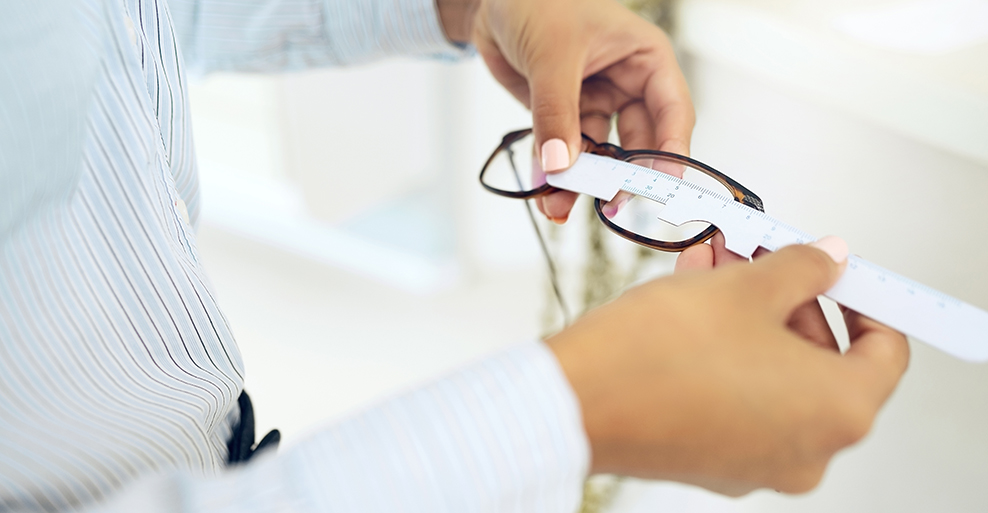
- Method: Offices use digital pupillometers or calibrated rulers. These tools cut down parallax error compared to measuring yourself at home.
FAQs
How is pupillary distance measured accurately?
Pupillary distance means the space between the centers of your pupils, measured in millimeters. An eye care provider uses a digital pupillometer. This device reads PD to the nearest half-millimeter, so there's less room for error. The tool lines up with each pupil while you focus on a fixed point. This way, your lenses end up centered right over your eyes. With accurate alignment, the optical center of each lens matches where your eye looks most. That cuts down on blur and eye strain.
What methods are available for measuring PD at home?
You can measure PD at home using basic tools, but you need to be careful. For the ruler method, grab a millimeter ruler and a mirror or ask a friend for help. Look straight ahead and measure from the center of one pupil to the other. For the monocular option, measure each eye from the bridge of your nose to the center of your pupil. This helps if your eyes aren't the same distance from your nose. Home methods can be off by one or two millimeters. Double-checking helps you get a more accurate number.
Why is accurate pupillary distance crucial for eyeglass prescriptions?
PD puts the lens power right where your eyes need it. Lenses have a sweet spot, the optical center, designed for a certain eye position. If your PD is wrong, your eyes end up looking through the wrong part of the lens. That misalignment can cause blur, headaches, or just plain tired eyes. Getting the PD right means you see clearly and comfortably. Strong prescriptions and progressives especially need precise PD. With higher lens power, even small mistakes matter more.
What is the average range of pupillary distance for adults?
Most adults have a PD somewhere between 50 and 75 millimeters. That covers the majority of people out there. The average is about 63 millimeters. If you're outside that average, don't worry—it's not a problem. Your PD is unique to you. Your glasses should match your number, not someone else's average.
Can I measure my pupillary distance using an online tool or app?
You can try online tools or apps, but your results depend a lot on your setup. Many apps use your phone camera with something for size reference. That helps convert pixels into millimeters. Good lighting and holding still make a big difference. If your setup's off, your reading might shift by a millimeter or two. Apps are usually fine for single-vision lenses. For progressives, though, it's better to get measured by a professional.
How precise does my PD measurement need to be for effective eyewear?
Your PD really needs to be pretty accurate if you want your glasses to work well. Try to keep it within about one millimeter of your true measurement. That kind of precision usually gives you clear vision, especially for most prescriptions.
Why does it matter so much? Well, lenses are designed to focus light to a certain spot. If your PD is off, even just a little, the focus shifts and the image doesn’t land where it should on your eye. Here’s a quick tip: if you’re getting different numbers when you measure at home, don’t panic. Just take a few measurements and average them out. Honestly, getting a consistent number is more important than rushing through the process.