A Complete Guide to Glasses Shapes and Frame Styles
Sep 10, 2026

Glasses are no longer just a tool for vision correction. The right pair can sharpen your features, soften strong angles, or add personality to an otherwise simple outfit. From classic square and rectangle frames to delicate metal, oversized, glitter, and geometric styles, there are more glasses shapes and frame designs to choose from than ever. The challenge is figuring out which ones actually work for you. The best glasses shape and frame style depends on your face shape, facial proportions, prescription needs, and personal style.
In this guide, we'll walk through the most popular shapes and frame styles—and how different designs work with various face proportions and prescriptions. We'll also cover what to keep in mind if you're picking frames for everyday wear. Take these recommendations as a starting point, but don't be afraid to ignore the face-shape charts if something feels right on you.
Start With the Most Popular Glasses Shapes
Before you get into materials or colors, start with the basics: the shape of the lenses. Square, round, oval, rectangle, cat-eye, and aviator—each creates a different effect on the face. Even a small change in proportion can make a familiar shape look completely different. Let's start with the most widely worn styles.
Square and Rectangle Glasses Frames: Structured and Timeless
What makes square frames work? Straight edges, defined corners, and an even width-to-height ratio. That structure gives them a polished look without relying on bold colors or flashy details. It's why they're as comfortable in a boardroom as they are on a weekend.
They're especially useful if you want your glasses to add some definition to softer facial features. Round and oval faces often pair well with angular frames because the contrast creates a more structured look. They're also a good choice if you prefer eyewear that feels classic and straightforward rather than overly trendy.
Rectangle frames have a similar character but usually look a little narrower and more streamlined. Because the shape emphasizes horizontal lines, they can work particularly well on longer faces where a little additional width helps create balance.
Both shapes are widely available in acetate, metal, titanium, and TR90, so you can change the overall impression without changing the basic silhouette. A thick black acetate rectangle can feel bold and professional, while a thin metal version looks much more understated.
Round and Oval Glasses Frames: Soft and Effortlessly Classic
Round frames are all about contrast. On an angular face, those curves really stand out—and that's exactly why they work. The shape has a strong vintage connection, sure, but modern materials and colors can make it feel anything but old-fashioned.
Round frames can work especially well for square or angular faces, where the curves soften the stronger lines of the jaw and cheekbones. They're also a natural choice if you like a creative, intellectual, or slightly retro aesthetic.
Oval frames sit somewhere between round and more structured shapes. They retain the softness of curved lenses but have a longer, more balanced silhouette, which makes them relatively easy to wear across different styles.
For stronger prescriptions, round and oval shapes can sometimes be practical because their more centered lens profiles may help manage edge thickness compared with very large, wide frames. Prescription strength and lens material still matter, so shape should be considered as part of the overall lens design rather than on its own.
Cat-Eye, Browline, and Aviator Eyewear: Instantly Recognizable
Some glasses shapes have such distinctive silhouettes that they can change the character of an outfit almost immediately. Cat-eye, browline, and aviator frames have all been around for decades, yet each continues to appear in updated materials, proportions, and colors.
Cat-Eye Glasses Frames
Cat-eye frames do one thing really well: they turn upward at the outer corners, which creates a lifted effect around your eyes. How dramatic that effect looks depends on the frame—soft curves are subtle, exaggerated corners are anything but.
They're often recommended for heart-shaped and diamond-shaped faces because the upward sweep can draw attention toward the upper face and create balance with a narrower chin. That doesn't mean they're limited to those face shapes, though. A softer cat-eye can work on many different facial proportions.
Browline Glasses Frames
Browline glasses put most of the visual weight across the upper part of the frame. Traditional versions combine a thicker upper rim with a thinner lower section, creating an effect that resembles a defined eyebrow line.
The style became especially recognizable in the 1950s and still works today because it adds structure without making the entire frame look heavy. Browline frames can be a good option for oval, round, and oblong faces, particularly when you want more definition around the eyes.
Aviator Glasses Frames
Aviators are best known for their teardrop-shaped lenses, thin metal construction, and double bridge. Originally developed for pilots, the shape has since become a staple of everyday eyewear and now appears in everything from traditional metal frames to modern acetate designs.
The wider upper portion and tapered lower edge can complement heart-shaped, oval, and square faces, although size and proportion make a significant difference. A large aviator can create a very different effect from a smaller, more restrained version of the same shape.
Beyond Basic Shapes: Frame Styles That Change the Look
Lens shape is only one part of a pair of glasses. Two frames with similar lens outlines can look completely different depending on their size, rim construction, material, and decorative details.
Geometric Eyewear: Make Your Glasses the Statement
Hexagonal, octagonal, and other geometric frames bring more angles into the design than traditional round or rectangular shapes. They're a good option if you want your eyewear to look intentional rather than simply blend into your outfit.
Because the shape itself provides visual interest, geometric frames don't need bright colors or heavy decoration to stand out. A thin metal hexagonal frame, for example, can feel modern and distinctive without being overly bold.
They work particularly well with simple outfits where the glasses can become the main accessory. If your wardrobe tends to be minimalist, an unusual frame shape can add personality without requiring a complete change in your clothing style.
Oversized Glasses Frames: Bold Without Trying Too Hard
Oversized glasses have a stronger visual presence than standard frames and can make even a simple outfit feel more fashion-forward. You can find oversized versions of almost every major silhouette, including square, round, rectangle, and cat-eye frames.
Their appeal isn't purely aesthetic. Larger lenses can provide a wider viewing area and may offer useful vertical space for some progressive lens designs. At the same time, bigger frames require more attention to fit because a frame that is too wide can slide around or overwhelm your facial proportions.
If you're trying oversized glasses for the first time, check the total frame width, bridge width, and temple length rather than judging size from the product photos alone. The goal is to get the oversized look without ending up with a frame that feels unstable.
Rimless, Semi-Rimless, and Full-Rim Eyewear: How Much Frame Do You Want?
Another decision is how much of the lens you want the frame itself to surround. Rim construction changes the visual weight of the glasses and can also affect durability, lens compatibility, and overall appearance.
Full-rim frames completely surround the lenses and create the strongest frame definition. They also provide solid structural support and give you plenty of options when it comes to colors, patterns, and materials. For stronger prescriptions, full-rim designs can be particularly practical because the frame helps conceal some lens edge thickness.
Semi-rimless frames use a frame around only part of the lens, usually the upper section, while the lower edge is secured with a nylon cord or sits in a groove. They have a lighter visual appearance than full-rim glasses while retaining more structure than completely rimless designs.
Rimless glasses take the minimalist approach even further. The lenses attach directly to the bridge and temples using small mounts or screws, leaving very little visible material around the lens. They're a natural choice for people who want their glasses to be subtle and lightweight.
Choose a Glasses Shape That Works With Your Face
Face-shape charts can be useful when you don't know where to start, but they shouldn't be treated as a set of rules. Your face may not fit neatly into one category, and the same frame can look different depending on its size, color, and proportions.
The more useful question is what you want the glasses to do visually: add definition, soften angles, balance width, or simply complement the features you already have.
Round and Oval Faces
Round and oval faces generally have softer contours, so angular shapes such as square, rectangle, and geometric frames can introduce some definition. Straight edges create contrast with curved cheeks and jawlines, giving the overall look a little more structure.
Browline frames are another option because they concentrate visual weight around the upper face rather than making the entire frame angular. This can be especially useful if you want your glasses to emphasize your eyes without creating a very sharp overall appearance.
Of course, round faces can wear round frames too. If you like a softer, more harmonious look rather than contrast, there's no reason to avoid them simply because a face-shape chart recommends angular frames.
Square and Oblong Faces
Round and oval frames can soften the stronger lines of square faces. Their continuous curves create a visual contrast with a defined jawline and can make the overall combination feel less rigid.
People with oblong faces often benefit from frames that add some height or visual presence to the face. Taller lenses, browline designs, and certain oversized frames can all work well, provided the frame isn't so large that it overwhelms the features.
Frame proportions matter more than following a specific shape recommendation. A narrow oval frame and an oversized oval frame can produce completely different results on the same face.
Heart, Diamond, and Triangle Faces
Heart-shaped, diamond-shaped, and triangle faces can have more width in the upper or cheekbone areas and a narrower lower face. Rounded shapes such as oval and round frames can soften angular features, while styles with visual weight in the upper part of the frame can help create balance.
Cat-eye frames draw attention toward the outer upper corners, while browline frames emphasize the area around the eyebrows. Aviators can also work well when their proportions complement the width of the forehead and cheekbones.
For these face shapes, frame width and upper-rim weight can be particularly useful to consider. A stronger upper rim can add definition where you want it, while a lighter or narrower upper frame can keep the overall look more understated.
How to Choose Glasses Without Relying on a Face Shape Chart?
A mirror can sometimes tell you more about frame fit than a face-shape chart. Put on the glasses and look straight ahead. Your eyes should sit reasonably close to the horizontal center of the lenses rather than appearing unusually high or low.
Then check the frame from the front. If it extends far beyond your temples, it may be wider than you need. If your cheeks push the lower edge upward when you smile, the frame may be too tall or the lens shape may not suit your facial proportions.
These simple checks are especially useful when shopping online because they help you judge the actual frame rather than relying solely on a category such as "best glasses for round faces." For more precise comparisons, measure a pair you already like and compare its dimensions with the new frame.
Your Prescription Can Change Which Frame Shapes Work Best
A frame can look perfect on the screen and still be a poor choice for your prescription. Lens shape and frame size affect how much lens material is needed, where the optical center sits, and how noticeable the finished lens thickness may be.
How Frame Shape Affects Lens Thickness for Strong Prescriptions?
For stronger prescriptions, especially high minus prescriptions, smaller and moderately sized lenses can help reduce visible edge thickness. The farther the lens extends from the optical center, the more material may be needed toward the edges.
The opposite issue can occur with strong plus prescriptions, where lens thickness is more noticeable toward the center. Large frames can require more lens material overall, so an oversized style may not always be the most practical choice for a strong prescription.
This doesn't mean you need to give up on a frame shape you love. High-index lenses and other lens options can help manage thickness and weight. The most practical choice comes from considering prescription strength, frame size, lens shape, and lens material together.
Are Oversized Glasses a Good Choice for High Prescriptions?
They can be, but there may be trade-offs. A large frame can require more lens material and may result in thicker or heavier lenses, depending on the prescription and material you choose.
If oversized glasses are an important part of your style, high-index or aspheric lenses may help reduce some of the thickness and weight. You can also look for an oversized style that isn't excessively wide or deep.
For some stronger prescriptions, a moderately sized round or oval frame may offer a more practical balance. The optical center, lens dimensions, and prescription all matter, so an optician can help determine whether a particular frame is suitable before you order.
Frame Materials and Details Matter Too
Once you've narrowed down the shape, think about what the frame is made from. Material changes the weight, flexibility, durability, and even the way a color looks on the finished frame.
Acetate: Classic With More Personality
Acetate frames are popular for good reason. The material can be produced in rich colors, layered patterns, translucent finishes, and polished surfaces, allowing a familiar shape to take on a completely different personality.
Tortoiseshell, clear, gradient, and bold acetate designs are particularly useful if you want your glasses to become part of your outfit. A black acetate square frame feels classic and structured, while a clear or translucent version of the same shape can look much lighter and more contemporary.
Acetate also works well for thicker statement frames because it can be shaped into substantial rims without losing the visual depth that makes the material appealing.
TR90 and Lightweight Frames: Made for Everyday Wear
TR90 is a lightweight thermoplastic material known for its flexibility and impact resistance. Its low weight can make it particularly useful for people who wear their glasses for long periods or want to try larger frames without adding too much weight.
Students, commuters, and anyone who spends most of the day in glasses can benefit from a lightweight frame. A pair may look great when you first put it on, but comfort becomes much more important after eight or ten hours of wear.
TR90 frames are available in a wide range of shapes and colors, so choosing a lightweight material doesn't mean settling for a plain design.
Metal and Titanium Frames: Minimalist and Lightweight
Thin metal frames create a clean, understated look by reducing the visual bulk around the lenses. Stainless steel and other metal alloys can provide a good balance between durability and a slim appearance.
Titanium is especially valued for being lightweight, durable, and resistant to corrosion. It is also often chosen by people looking for a skin-friendly metal option.
A thin metal or titanium frame works particularly well when you want your eyewear to look polished without becoming the main focus of your outfit. It can also be a practical choice if you prefer a lighter frame for all-day wear.
Small Details Can Make a Classic Frame Stand Out
Sometimes the overall shape isn't what makes a frame interesting. Small details such as decorative rivets, textured temples, metal accents, layered colors, or an unusual finish can completely change the character of a familiar silhouette.
Clear, glitter, gradient, and colored frames are good examples. A clear round frame can look understated and modern, while the same round silhouette in glitter or translucent color becomes much more expressive.
It's also worth checking the hinge and temple construction. Spring hinges allow the temples to flex outward slightly and can make a frame more forgiving if your face is a little wider than the standard frame width. Details like these may not be obvious in a product photo, but they can make a noticeable difference during everyday wear.
How to Choose a Glasses Style for Your Everyday Look?
Once fit and prescription requirements are covered, your glasses can become a styling decision. Think about the clothes you normally wear, the settings where you'll use the glasses, and whether you want your eyewear to blend in or attract attention.
Want Something Timeless? Start With Classic Shapes
Black square and rectangle frames are reliable choices because they work with a wide range of outfits and occasions. They're equally comfortable in a professional setting, during a casual weekend, or as part of a more polished everyday look.
You can keep the familiar shape and introduce personality through material and color. Tortoiseshell acetate, dark blue frames, subtle metal accents, or a translucent finish can make a classic silhouette feel less predictable without making it difficult to wear.
If you're buying one primary pair and want maximum versatility, a well-fitting classic shape in a neutral color is a sensible place to start.
Want Your Glasses to Stand Out?
This is where glitter, colorful, transparent, geometric, and oversized frames come into play. A distinctive pair can turn a simple outfit into a more intentional look without requiring much else in the way of accessories.
Statement glasses work best when the frame has room to stand out. If the glasses already have a bold shape and color, keeping the rest of the outfit relatively simple can make the frame feel intentional rather than visually crowded.
Just don't sacrifice fit for the look. A dramatic frame that constantly slips down your nose or presses against your temples won't feel stylish for very long.
Need Glasses for School, Work, and Everything Else?
If you wear the same glasses throughout the day, versatility and comfort become more important. A balanced shape in a lightweight material can move easily between classes, meetings, errands, and weekends.
TR90 and titanium are useful options when weight is a concern, while acetate gives you more choices in color and pattern. You can also choose a relatively classic silhouette and use subtle details to make it feel more personal.
For people whose style changes from casual to professional during the week, a versatile frame can save you from having to rethink your eyewear every time you get dressed.
Conclusion
Choosing the right glasses shape isn't simply a matter of matching your face to a chart. Frame proportions, prescription needs, material, comfort, and personal style all play a role, and the best pair is usually the one that balances all of them.
Square and rectangle frames remain reliable classics, while round, oval, cat-eye, aviator, geometric, and oversized styles give you more room to experiment. Material can change the personality of the same shape just as dramatically: acetate adds depth and color, TR90 keeps larger styles lightweight, and titanium offers a clean, minimalist feel.
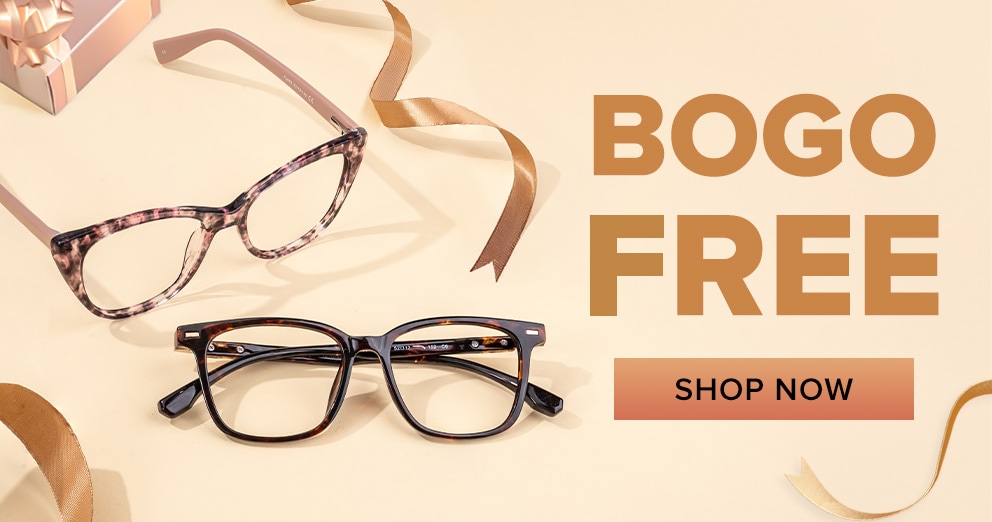
At GlassesShop, you can explore different frame shapes and materials to find a pair that fits both your vision needs and your everyday style. Use the Face Shape Detector if you want a starting point, then check the actual frame proportions and measurements before ordering. With Buy One Get One Free, you can also choose a second style for a different side of your wardrobe.
The goal isn't to find the frame that a chart says you "should" wear. It's to find glasses that fit comfortably, work with your prescription, and look like something you'd actually enjoy wearing.
FAQ
What Is the Most Popular Glasses Shape?
Square and rectangle frames are consistently popular because they're easy to style across different settings. Round, cat-eye, aviator, and geometric shapes also have strong followings, especially among people who want something more distinctive. But popularity isn't a great reason to choose a frame—your proportions and personal style matter more.
What Is the Difference Between Glasses Shape and Frame Style?
Glasses shape generally refers to the outline of the lens, such as square, round, oval, rectangle, or cat-eye. Frame style is broader and can describe features such as oversized proportions, browline construction, rimless designs, geometric details, or aviator styling.
For example, you could have an oversized square frame, a thin metal round frame, or a rimless oval frame. The shape tells you what the lens looks like, while the frame style describes how the entire design is constructed.
What Glasses Shape Is Best for My Face?
There isn't one universally best glasses shape for each face. As a starting point, angular frames can add definition to round faces, while round and oval shapes can soften stronger angles on square faces. Heart, diamond, and triangle faces can work with rounded shapes as well as styles that add visual weight to the upper part of the frame.
Your face shape is only one consideration. Frame width, bridge fit, lens height, and the look you want to create are just as important when deciding whether a particular pair works for you.
What Are the Best Glasses Shapes for High Prescriptions?
Smaller or moderately sized frames can often be more practical for stronger prescriptions because they may reduce the amount of lens material needed. Round and oval shapes can also help manage lens proportions, depending on the prescription.
High-index lenses can further reduce thickness and weight. The best choice depends on your prescription, frame dimensions, lens shape, and lens material, so it's worth checking the frame's prescription compatibility before ordering.
Can I Put My Prescription in Any Frame Shape?
Not necessarily. Many prescriptions can be fitted into a variety of frame shapes, but very large or unusually deep frames may be less practical for stronger prescriptions.
If you have a high prescription, frame size becomes particularly important because larger lenses can require more material and may make thickness more noticeable. Check the retailer's prescription range for the specific frame and consult an optician if you're unsure.
Are Metal or Titanium Frames Better Than Acetate?
Neither material is automatically better. Metal and titanium frames are often chosen for their slim appearance and lightweight feel, while acetate provides more room for bold colors, patterns, thicker rims, and statement designs.
Think about how you wear your glasses. If you want something light and understated for all-day use, metal or titanium may be a good fit. If you want your glasses to become a more noticeable part of your outfit, acetate offers more options for color and texture.